
Chile is a country of extraordinary contrasts — stretching from the driest desert on Earth in the north to the glacial peaks of Patagonia in the south — and the good news is that you don’t need a bottomless wallet to experience any of it. From free-entry museums and moonlit stargazing in the Atacama to self-guided hikes through Torres del Paine and cheap empanadas eaten standing at a street stall, Chile rewards the budget-conscious traveler who knows where to look.
Whether you’re a backpacker counting every peso or a mid-range traveler looking to stretch your money further without sacrificing the best experiences, this guide has everything you need. Here’s how to travel Chile on a budget — from daily cost breakdowns and overnight bus hacks to free beaches, volcanic hikes, and smart tips for Easter Island.
Daily Costs in Chile: What to Budget Per Day
Before diving into the tips, it helps to know what things actually cost on the ground. The following prices are sourced from Budget Your Trip, Numbeo, SantiagoTurismo, and current accommodation and dining prices across Chile.
- Hostel dorm bed: 9,000–13,500 CLP ($11–16 USD)
- Basic hotel room for two: 31,000–45,000 CLP ($38–55 USD)
- Public transport single journey (Santiago): 770–870 CLP ($0.80–1 USD)
- Museum entry: 2,200–4,500 CLP ($2.70–5.50 USD)
- Coffee: 1,300–2,200 CLP ($1.60–2.70 USD)
- Breakfast or lunch at a café (per person): 4,500–7,000 CLP ($5.50–8.50 USD)
- Mid-range restaurant dinner (per person): 11,000–16,500 CLP ($13.50–20 USD)
- Glass of wine: 2,700–4,500 CLP ($3.30–5.50 USD)
- Beer: 2,200–3,800 CLP ($2.70–4.50 USD)
- Average daily total: 33,000–66,000 CLP ($34–70 USD)
With smart choices on accommodation, food, and transport, a daily budget of around $40–50 USD is very achievable in most of Chile. Remote regions like Easter Island and Patagonia will push those numbers higher, but the tips below will help keep costs manageable even there.
Explore Chile’s Best Budget-Friendly Tours and Experiences
1. Use Overnight Buses to Save on Accommodation
Chile’s elongated geography — running nearly the entire length of South America — means that getting between destinations is a logistical consideration every traveler needs to think through. Domestic flights are quick but costly; the smarter budget move is to lean on Chile’s excellent long-distance bus network instead.
Operators like Turbus and Pullman run comfortable, reliable overnight services connecting major highlights across the country, including San Pedro de Atacama, colorful Valparaíso, and the lakeside town of Puerto Varas near Patagonia. The real trick is to book overnight departures: you travel while you sleep, wake up in a new destination, and effectively cut one night of accommodation from your budget entirely. On longer routes, a quality semi-cama (reclining seat) or cama (full flat bed) bus ticket can save you $30–60 USD compared to flying, while the scenery rolling past the window at dawn is a bonus you won’t get at 30,000 feet.
2. Cycle and Stargaze in the Atacama Desert
The Atacama Desert is one of the most surreal places on the planet — a vast, bone-dry landscape of salt flats, rust-red rock formations, and volcanic peaks that turns extraordinary colors at dusk. The good news for budget travelers is that many of the Atacama’s most memorable experiences cost very little or nothing at all.
Base yourself in San Pedro de Atacama, where hostels on and around Caracoles Street offer affordable dorm beds and are within easy walking distance of bike rental shops. Cycling to nearby natural sites independently is significantly cheaper than joining organized tours, and the terrain is mostly flat and manageable. Don’t miss sunset at Mirador de Kari, a spectacular rock overhang just 30 minutes by bike from town — access is completely free, and the panoramic views over the Valle de la Luna landscape are genuinely breathtaking. Pack supermarket snacks and plenty of water before heading out to avoid the inflated prices at tourist-facing shops near the major sites.
After dark, the Atacama becomes something else entirely. With virtually no light pollution and skies at high altitude, this is one of the best places on Earth for stargazing — and on clear nights, simply lying back on the desert floor and looking up costs nothing at all. If you want a guided deep-sky experience with powerful telescopes and expert commentary, affordable group tours are available in San Pedro and well worth the modest outlay.
Book a Stargazing Experience in the Atacama
3. Hike Torres del Paine National Park Independently
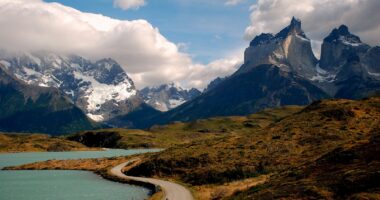
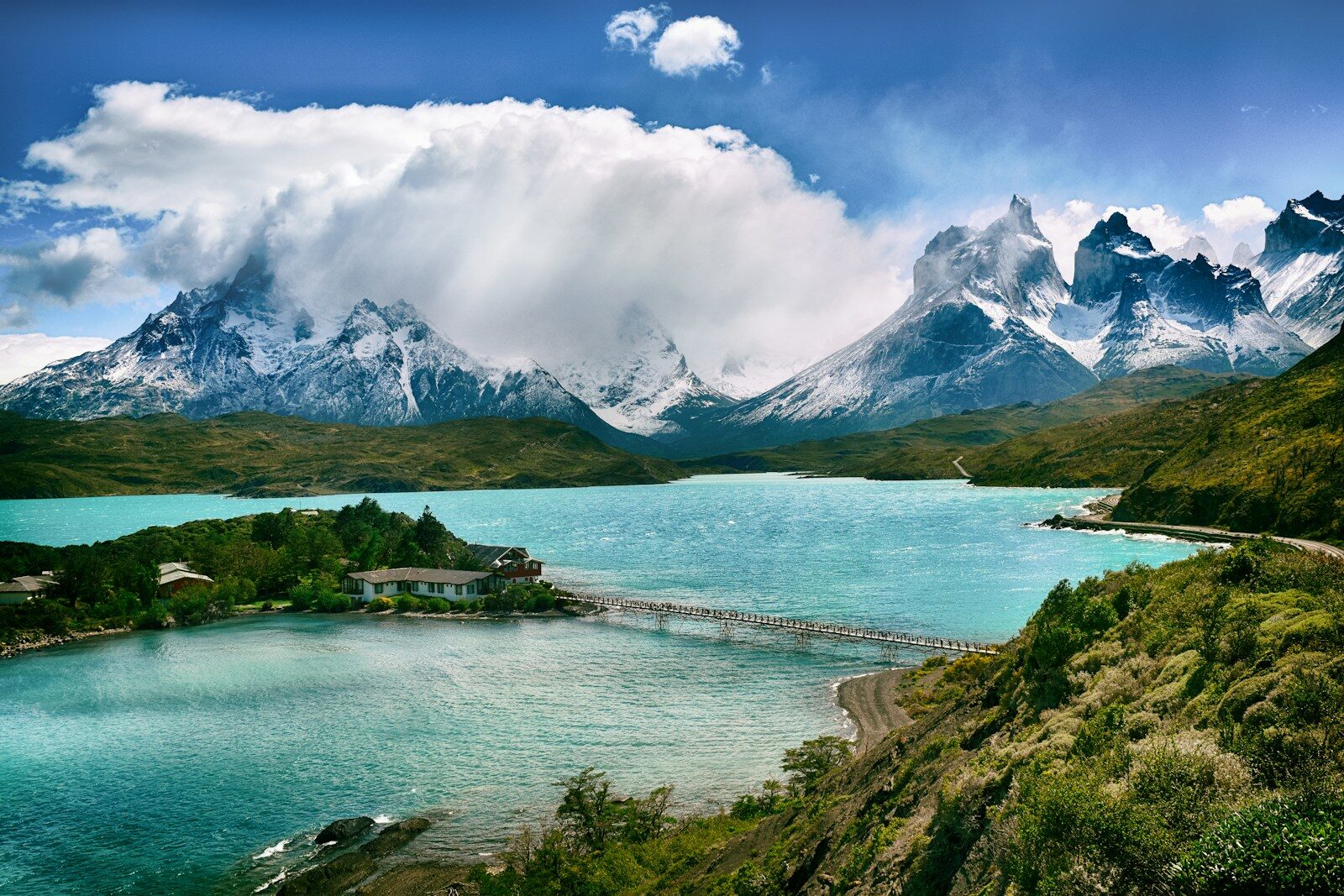
Torres del Paine National Park is the crown jewel of Chilean Patagonia — a landscape of granite spires, electric-blue glacial lakes, and windswept pampas that justifiably appears on almost every serious traveler’s bucket list. It can, however, be an expensive destination if you’re not strategic about it.
The single biggest money-saving move is to skip the all-inclusive guided tour packages and tackle the iconic W Trek independently. Official campsites inside the park are significantly cheaper than lodge accommodation, and with a good tent and sleeping bag you can cover the full route for a fraction of what organized groups pay. Stock up on groceries in Puerto Natales — the last town before the park entrance and a much cheaper place to buy provisions than anything inside — and take a public bus to the park gates rather than a private transfer.
Park entry for three days costs around 32,400 CLP in 2025 and grants access to most of the major viewpoints including Laguna Amarga. If you’d rather avoid the entry fee altogether, the Cebolla Lagoon Trail just outside the main park boundary is free to access and delivers spectacular Patagonian scenery without the ticket price. It’s a lesser-known gem that most tour groups never visit.
Browse Glacier and Trekking Tours in Torres del Paine
4. Soak Up Free Culture and Architecture in Santiago
Santiago is a far more dynamic and culturally rich city than most visitors expect, and a surprising amount of what makes it great costs absolutely nothing. The key is knowing which neighborhoods to wander and which landmarks to seek out.
Start in the bohemian Bellavista district, where street art murals cover entire building facades and live music spills out of open doorways on weekend evenings. Walk east to the historic Plaza de Armas and take time with the Santiago Metropolitan Cathedral — its grand neoclassical facade and elaborately decorated interior are genuinely impressive and free to enter. The neighboring Central Post Office building is another architectural highlight, its French-inspired colonnaded design a leftover from the city’s 19th-century ambitions.
For the best view in the city, hike the trail up Cerro San Cristóbal — a one-hour climb rewarded with panoramic vistas over the entire metropolitan area and the Andes beyond. Both the park and the hilltop Sanctuary of the Immaculate Conception at the summit are free to enter. If you’d rather ride than walk, the cable car and funicular offer a more leisurely ascent for a small fee.
Discover Tours and Day Trips from Santiago
5. Visit the Museo Nacional de Bellas Artes — Always Free
For budget travelers who want a genuine dose of culture without paying for it, the Museo Nacional de Bellas Artes in Santiago is an unmissable stop. Admission is permanently free — no special days, no exceptions — making it one of the best-value attractions in the entire country.
The collection spans several centuries and continents, taking in Chilean colonial-era works, powerful modern pieces by internationally acclaimed artists like Roberto Matta, and a selection of European and Asian works that add impressive breadth to the permanent holdings. The building itself, a striking Beaux-Arts structure with a central glass dome, is as much of an attraction as the art inside. After your visit, the neighboring Parque Forestal is the perfect spot for a picnic — making for a genuinely zero-cost cultural afternoon in the heart of the capital.
- Address: Museo Nacional de Bellas Artes, José Miguel de la Barra 650 (Parque Forestal), Santiago
- Opening hours: Tuesday–Sunday, 10:00 AM–6:30 PM
- Closed: Monday
- Entry: Free
6. Stroll Through Valparaíso’s Colorful Hills
Valparaíso is one of those cities that photographers and poets have been falling for since the 19th century, and it remains just as captivating today. A UNESCO World Heritage site perched on dozens of hills overlooking the Pacific, it’s a city built for wandering — and wandering costs nothing.
The best way to experience Valparaíso on a budget is to simply walk. The bohemian hillside neighborhoods of Cerro Concepción and Cerro Alegre are a constantly evolving open-air gallery, their walls covered in world-class street murals that range from political commentary to pure visual spectacle. Narrow streets connect stairways, artisan markets, and independent cafés where you can nurse a coffee for an hour watching local life unfold at a pleasantly unhurried pace.
The historic funiculars (ascensores) that climb between the lower city and the hills are cheap to ride and offer unique aerial views of the terracotta rooftops below. For the best panoramic view over the bay, make your way to Mirador Paseo Gervasoni — a free lookout that captures the full sweep of Valparaíso’s extraordinary geography in a single frame.
Book Day Trips to Valparaíso from Santiago
7. Splash Around at Chile’s Free Public Beaches
Chile’s Pacific coastline stretches for thousands of miles and includes some genuinely beautiful beaches — all of which are free to access. A beach day in Chile costs only as much as you want to spend, making the coast one of the most budget-friendly options in the country for a full day out.
Pichilemu, in the O’Higgins region south of Santiago, is the country’s unofficial surf capital and a perfect base for budget beach travelers. Hostels and surf camps here are among the most affordable accommodation options in Chile, and board rentals and beginner lessons are available at low daily rates. For a more relaxed beach experience without the surf culture, nearby Playa Hermosa offers calm waters and sandy shores with no entry charges or tourist infrastructure to push up costs. North of Santiago, Punta de Tralca Beach just outside Valparaíso is another excellent free option — a golden-sand swimming beach popular with locals that most international tourists overlook entirely.
Explore Coastal Tours and Beach Day Trips
8. Fill Up on Empanadas, Pisco Sours, and Market Food
Chilean street food and market cuisine is one of the great budget travel pleasures of South America — flavorful, filling, and genuinely affordable when you eat where locals eat rather than where tourists are directed.
Santiago’s Central Market is the place to start. This extraordinary covered market has been the city’s seafood hub since 1872, and the ceviche here — made with fish bought directly from the morning’s catch — is outstanding at prices a fraction of what you’d pay in a sit-down restaurant. From the surrounding street stalls, pick up an empanada de pino (a golden pastry filled with spiced beef, diced onion, olive, and hard-boiled egg) or a slice of pastel de choclo, a hearty layered corn and meat casserole that is as warming as it is cheap.
For drinks, skip the upscale cocktail bars and head instead to the independent spots lining the streets of Barrio Lastarria or Bellavista. Both neighborhoods have clusters of affordable bars where pisco sours — Chile’s national cocktail, made with pisco brandy, lemon juice, egg white, and sugar syrup — go for just a few dollars a glass. It’s also worth sampling specialist pisco varieties from both Chile and Peru, as the two countries have a long-running and genuinely interesting debate about which side of the border produces the superior spirit.
Discover Food Tours and Wine Experiences in Santiago
9. Hike Villarrica National Park on a Budget
The Chilean Lake District — a region of snow-capped volcanoes, emerald forests, and mirror-still lakes — is one of the most rewarding areas of the country for budget outdoor adventure. Based in the adventure-sports town of Pucón on the shores of Lake Villarrica, you’re well positioned to explore Villarrica National Park without spending a fortune.
Park entry costs just 6,500 CLP in 2025 — a modest fee for access to a landscape of genuine drama. The park’s trail network includes routes to scenic waterfalls and the turquoise shores of Lakes Calafquén and Caburgua, all walkable independently at no extra cost. If you’re planning to summit Villarrica Volcano itself — one of the most active volcanoes in South America, with a lava lake visible from the crater rim on clear days — a certified guide is mandatory and tours typically include equipment, entrance fees, and crampons in the quoted price. Shop around in Pucón for the best rates, as competition between operators keeps prices reasonable.
To keep overall costs low in the area, base yourself in one of Pucón’s well-priced hostels or campgrounds, and head to the town’s lively morning market for fresh fruit, vegetables, and local produce to prepare your own meals rather than eating out for every sitting.
Book Volcano Tours and Outdoor Adventures in Pucón
10. Visit Easter Island Without Blowing the Budget
Easter Island — Rapa Nui in the indigenous language — is one of the most remote inhabited places on Earth, and its airfare and general cost of living reflect that isolation. It’s not the easiest destination to visit cheaply, but smart advance planning can make it far more affordable than most travelers expect.
Book flights early. LAN Chile operates the only direct service from the mainland, and fares drop significantly when purchased weeks or months in advance. Once on the island, look for guesthouses and campgrounds that offer kitchen access — cooking your own meals from supermarket ingredients bought in Hanga Roa will cut food costs dramatically compared to eating out at every sitting, where prices run noticeably higher than on the mainland.
Easter Island is small enough to explore by bicycle or scooter, and both are available to rent cheaply from operators in Hanga Roa. This is comfortably the most affordable way to reach the major moai sites — including the inland platform of Ahu Akivi and the ceremonial village of Tahai — rather than joining expensive minivan tours. Many of the most atmospheric spots around the Rapa Nui National Park are easily accessible on foot from Hanga Roa’s center, which means transport costs can be kept very low if you plan your days well.
Explore Easter Island Tours and Guided Experiences
Final Budget Tips for Traveling Chile
A few extra strategies worth keeping in mind as you plan your Chile itinerary. First, travel in the shoulder seasons — spring (September–November) and fall (March–May) — when accommodation prices drop, crowds thin out, and the weather remains perfectly pleasant across most of the country. Summer (December–March) brings peak prices, especially in Patagonia and the Lake District.
Second, book accommodation with kitchen access wherever possible. Self-catering even a couple of meals per day can save $15–25 USD daily, which adds up meaningfully over a long trip. Third, keep an eye on the CLP-to-USD exchange rate before and during your trip; using a no-foreign-transaction-fee travel card rather than exchanging cash at airport booths will save you a meaningful percentage on every transaction. Finally, always carry some cash for smaller towns, markets, and rural areas where card acceptance remains inconsistent.
Plan Your Budget Chile Adventure
FAQs: Traveling Chile on a Budget
What are some free activities for families in Chile?
Families visiting Chile will find plenty of no-cost options across the country. In Santiago, Parque Bicentenario offers open green space, playgrounds, and picnic areas in a relaxed setting. The beaches of Viña del Mar are free to access and perfect for a full family day out, while Valparaíso’s steep hills, street art, and old funicular rides make for an educational and entertaining urban adventure that children and adults enjoy equally.
Are free walking tours available in Chilean cities?
Yes — tip-based free walking tours operate regularly in both Santiago and Valparaíso. These are run by local guides who lead groups through the main historic and cultural neighborhoods, covering architecture, history, and local stories. You pay what you feel the tour was worth at the end, making them an excellent value introduction to each city. Check noticeboards at hostels or search online for current schedules before you arrive.
What outdoor activities can I enjoy cheaply in Chile?
Chile is an outdoor enthusiast’s dream, and many of its best natural experiences are low-cost or free. Hiking in Torres del Paine, Villarrica National Park, and the Atacama Desert involves modest entrance fees but no per-activity charges once you’re inside. Beach access is free nationwide. Cycling around Easter Island and the Atacama is very affordable. Even volcano trekking — which requires a guide — is competitively priced when booked directly with local operators in Pucón.
What is Chilean street food like?
Chilean street food is hearty, flavorful, and budget-friendly. Empanadas — pastry parcels filled with spiced beef, seafood, or cheese — are the national snack and available everywhere for very little money. Sopaipillas (pumpkin-based fried flatbreads) are another popular cheap eat, often served with pebre (a herby tomato salsa) or mustard. At markets, fresh ceviche, chorrillana (fries topped with caramelized onions, beef strips, and fried eggs), and pastel de choclo are all filling, affordable, and genuinely delicious options.
Are there free cultural festivals in Chile?
Yes, Chile has a rich calendar of public festivals and events, many of which are free to attend. The Fiestas Patrias celebrations on September 18th and 19th — Chile’s national holidays — bring free outdoor concerts, folk dancing, traditional food stalls, and rodeo events to cities and towns across the country. The Valparaíso New Year’s fireworks display over the bay is one of South America’s most spectacular public events and draws enormous crowds each year at no cost.