
How to Get Around Paris: Metro, Buses, Boats & More
A complete guide to getting around Paris, including the Metro, buses, bikes, boats, taxis, and vintage cars.Paris has one of the most extensive public transportation networks in Europe, and for visitors, the best way to get around Paris is almost always the Metro. With 16 lines, over 300 stations, and trains running until past 1:00 AM most nights, it gets you almost anywhere in the city quickly and cheaply.
That said, the Metro isn’t the only option — and for some trips, it’s not even the best one. This guide covers every way to get around Paris, from buses that show you more of the city to Seine river cruises that put the Eiffel Tower and Notre-Dame front and center.
Getting around Paris: tips and tricks Many older Metro carriages have no air conditioning: On hot days, lines 1 and 14 — both fully automated and newer — are the most comfortable. The Paris Metro is not fully wheelchair-accessible: Many stations have narrow corridors and no elevators, so check the RATP accessibility map before traveling with a stroller or wheelchair. Not all taxis accept cards: Carry some euros for cab rides and smaller purchases. Validate your ticket on the RER: Unlike the Metro, RER trains require you to keep your ticket and scan it again on exit. Passengers without a valid stamped ticket face fines from inspectors, even if they hold a travel pass. The Metro doesn’t reach all airports: CDG is served by the RER B, and Orly by the Orlyval shuttle linking to the RER B at Antony. Neither is on the Metro network — allow extra travel time from the center.
Useful apps for public transportation in Paris Bonjour RATP: The official app of Paris’s transport authority. Use it for Metro, bus, and RER routes, real-time departures, and service alerts. Citymapper: Great for multimodal journey planning — it tells you which end of the train to board and which exit to use. G7 Taxis: One of Paris’s most established cab companies; book and track rides directly through the app. Google Maps: Dependable for walking, cycling, and driving routes, and works well for transit too.
Book different methods of Paris transportation
1. Getting around by train in Paris
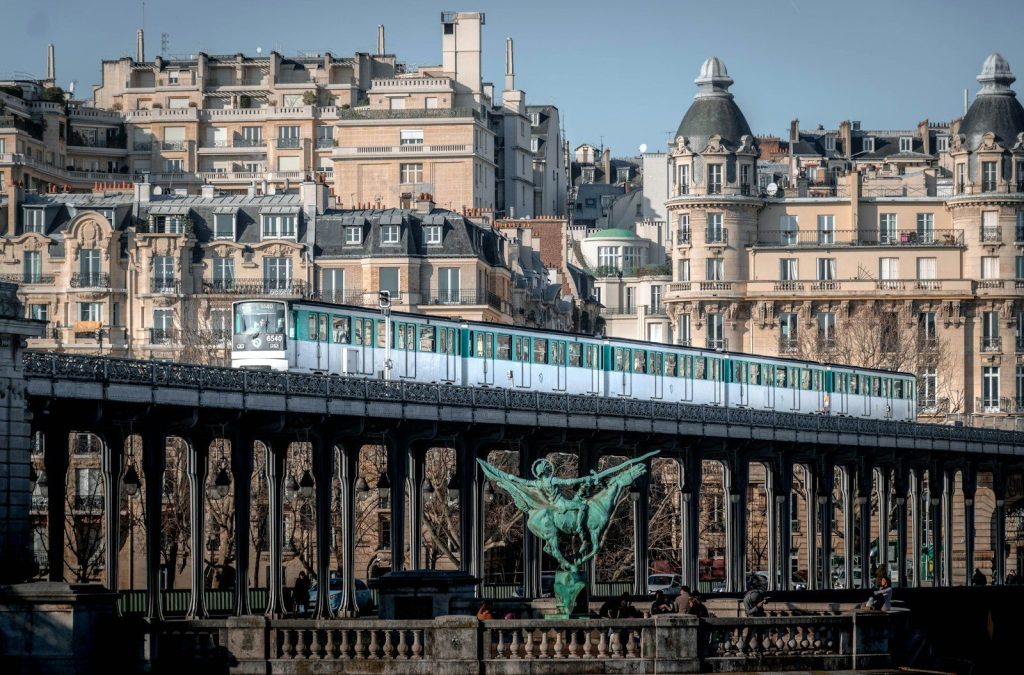
The Metro is the backbone of public transportation in Paris. Trains run from 5:30 AM to 1:15 AM Sunday to Thursday, and until 2:15 AM on Friday and Saturday nights. Each line has a number, a color, and two named endpoints — Line 1 (yellow) runs from La Défense in the west to Château de Vincennes in the east and passes many of the city’s most famous landmarks. The RER (Réseau Express Régional) is a faster commuter rail network connecting central Paris to the suburbs and airports, and is the go-to for reaching Versailles.
How to plan your metro journey in Paris The Bonjour RATP app and website offer a full route planner for both the Metro and RER. Citymapper is equally reliable and provides more detailed turn-by-turn navigation.
How to buy and use train tickets in Paris Single tickets and carnets (books of 10) are available at station machines and staffed ticket desks. For unlimited travel over several days, the Paris Visite Pass covers zones 1–3 (central Paris) or zones 1–5 (including both airports and Versailles), and can be purchased at Metro stations and on the tourist office website. Tap your ticket or pass on the yellow reader before boarding, and again on exit when traveling by RER.
Travel by train in Paris
2. Taking the bus in Paris
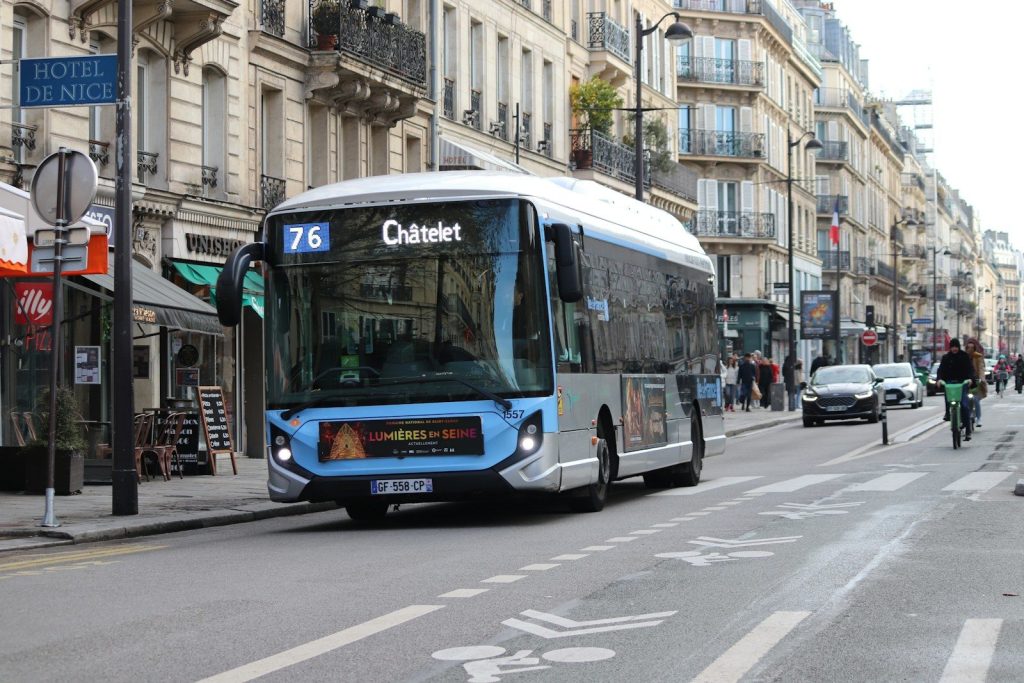
Buses are one of the best ways to get around Paris on a budget, and unlike the underground, they let you watch the city go by. Routes through central Paris pass landmarks like the Louvre and Notre-Dame, making a bus ride one of the more scenic ways to travel between neighborhoods. Keep in mind that around half the routes don’t run on Sundays, and some quieter lines stop early in the evening.
How to plan your bus journey in Paris The Bonjour RATP and Citymapper apps cover Paris buses as well as the Metro. It’s worth planning your journey in advance to account for the limited hours and days that some routes operate.
How to buy and use bus tickets in Paris Metro tickets and carnets are valid on buses. Pick them up at Metro stations, newsstands, or tabacs around the city. Validate your ticket at the machine near the driver when you board — the same ticket cannot be used again for a connection within 90 minutes on the same ticket type.
Enjoy Paris via bus
3. Getting around Paris by bike

Vélib’ — Paris’s self-service bike-share scheme — operates over 1,400 stations and around 20,000 bikes, including e-bikes, across the city. Cycling works well for short hops between central neighborhoods, and the bike lane network has expanded considerably in recent years. For a more structured experience, guided bike tours in Paris take in the main sights, with some early-morning options departing before the crowds descend.
How to plan your bike ride in Paris Google Maps and Citymapper both plot cycling routes and highlight dedicated bike lanes. Either app shows real-time Vélib’ station availability, so you can check whether bikes are docked nearby before heading out.
How to rent a Vélib’ bike in Paris Download the Vélib’ app to find stations, check availability, and purchase a day or weekly pass. Both classic and electric bikes are on offer. When you’re finished, return the bike to any docking station in the city — private rental companies like Rentabike Paris also hire bikes by the hour or day if you’d prefer a reserved ride.
Book a bike tour around Paris
4. Getting around Paris by boat

The Seine runs straight through the heart of Paris, and Batobus operates a hop-on, hop-off river shuttle with eight stops at major attractions including the Eiffel Tower, the Louvre, and Notre-Dame. It’s slower than the Metro and better suited to sightseeing than getting somewhere quickly, but a day pass covers unlimited travel. For something more memorable, evening Seine cruises — some with dinner and live music — rank among the best things to do in Paris after dark.
How to plan your boat journey in Paris Check routes, timetables, and fares on the Batobus website or app before you travel, as schedules change by season. Google Maps also displays Batobus stops alongside other transport options for straightforward journey planning.
Buy Seine river cruise tickets
5. Using taxis and ride-sharing services in Paris
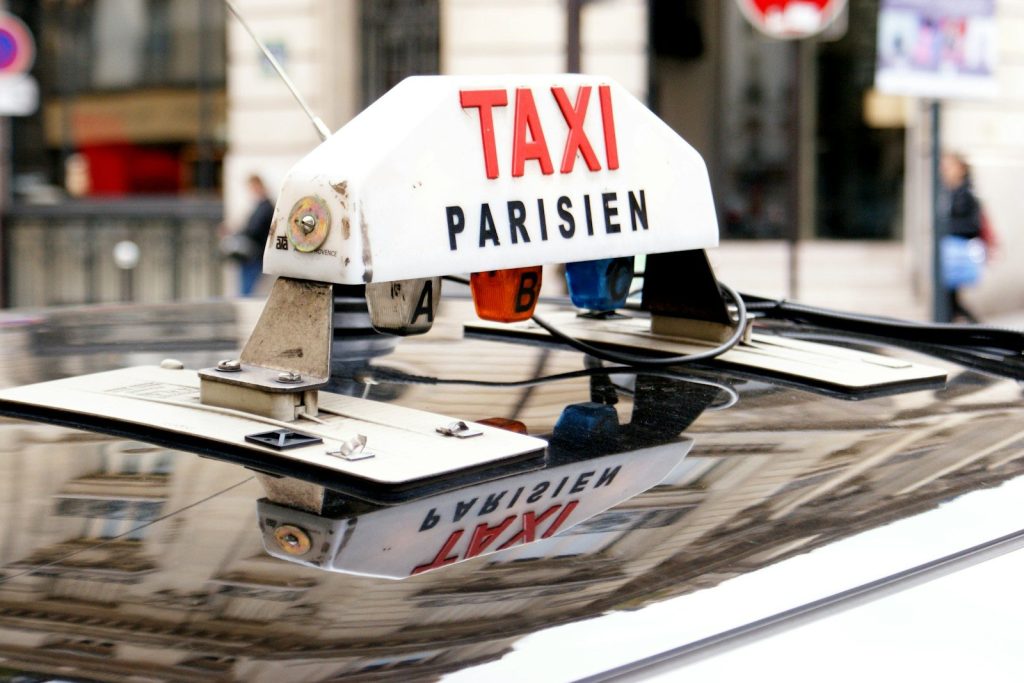
Metered taxis are easy to find throughout Paris, with stands outside major attractions, hotels, and both Charles de Gaulle and Orly airports. Uber also runs across the city around the clock. For longer journeys, pricing is broadly similar between the two, though metered cabs tend to work out cheaper for short distances.
How to book a taxi or rideshare in Paris Look for the illuminated “Taxi Parisien” sign on the roof and make sure the meter is running before you set off. Use the G7 or Taxis G7 app to pre-book a licensed cab, or simply open Uber to request a ride from anywhere in the city.
6. Explore Paris by vintage car

Driving yourself around Paris is not recommended — traffic is dense, parking is scarce, and the one-way system in central areas can confuse even locals. A far more enjoyable alternative is a vintage car tour, which whisks you through the city’s iconic neighborhoods and past its landmark sights with a knowledgeable local driver at the wheel.
Get around Paris by vintage car