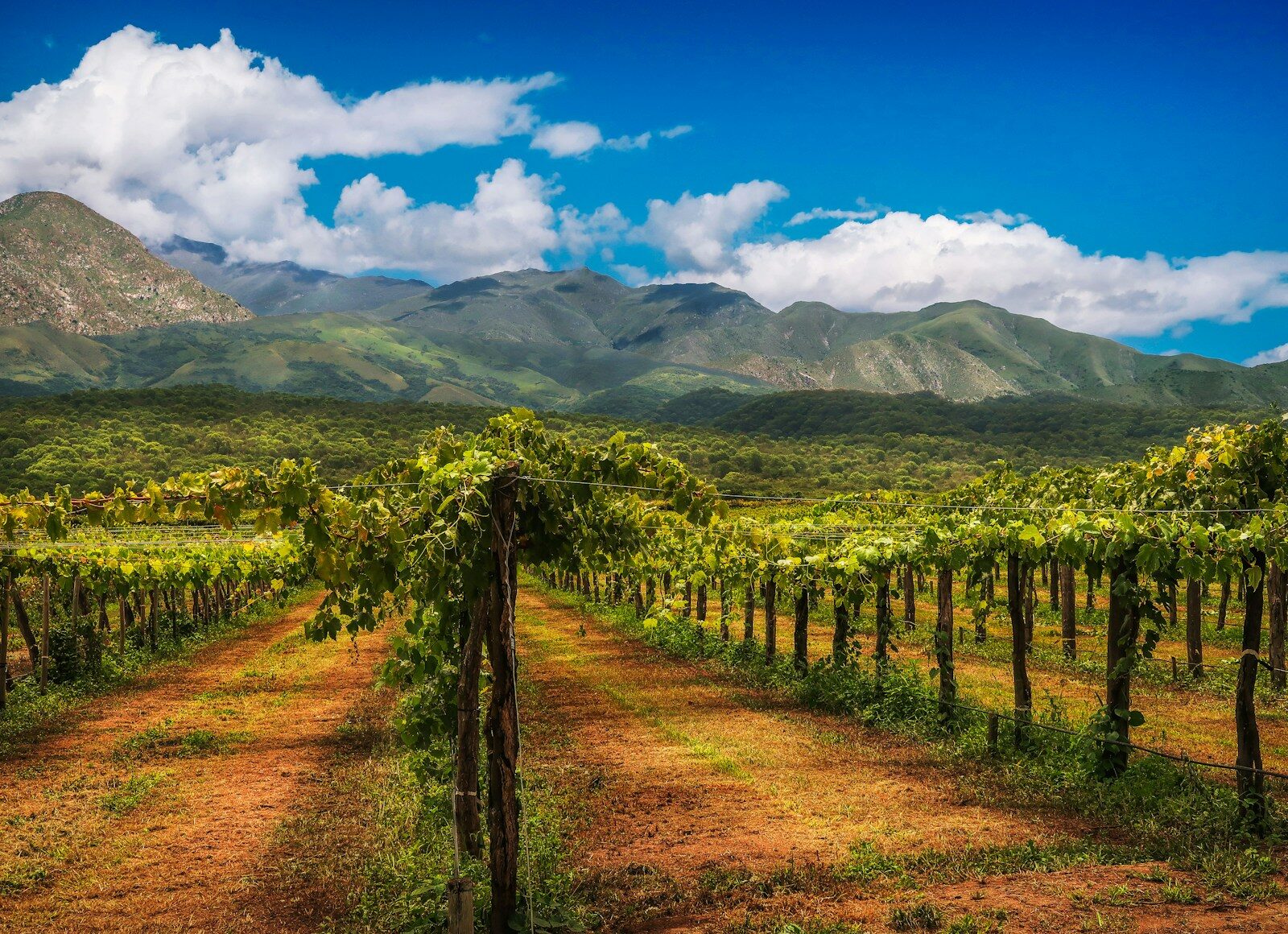

When most people think of wine tasting in Argentina, Malbec comes to mind almost immediately — and with good reason. Argentina produces close to 75 percent of the world’s Malbec, and the Mendoza region has built an international reputation on the strength of its deep, dark-fruited reds. But focusing solely on Mendoza means missing a wine country that is far more varied, surprising, and rewarding than its most famous export would suggest.
From the highest-altitude vineyards on the planet in the sun-baked hills of Jujuy to the southernmost winery in the world in the frigid reaches of Chubut Province, Argentina’s wine regions span an extraordinary range of climates, elevations, and terroirs. The native torrontés grape produces aromatic, stone-fruit whites in the northwest that bear no resemblance to anything you’d find in Mendoza. Buenos Aires province has developed a coastal wine scene built on fresh, complex chardonnays and sparkling wines. And in Patagonia, cool temperatures and low rainfall produce slow-ripening grapes with a precision and balance that have quietly earned international attention.
These seven regions represent the full breadth of wine tasting in Argentina — from household names to hidden gems worth going out of your way to discover.
Discover Argentina’s Best Winery Tours and Tastings
Why Is Argentine Wine So Highly Regarded?
Argentina ranks among the top ten wine-producing countries in the world, and its ascent over the past few decades has been rapid and well-deserved. The country’s secret lies largely in its geography: the Andes Mountains create a combination of high altitude, intense sunlight, low humidity, and dramatic temperature swings between day and night that together produce grapes of exceptional concentration, colour, and aromatic complexity.
These conditions — found across multiple provinces at elevations ranging from a few hundred to over 3,000 metres above sea level — allow Argentina to grow a wide variety of grapes with results that consistently punch above their price point. The emergence of small, artisan producers alongside the country’s established bodegas has added further depth and diversity to a wine scene that is still, in many respects, finding its full potential.
Argentina’s Key Wine Grape Varieties
Malbec is the undisputed king, accounting for nearly 40 percent of all red varieties planted in Argentina and producing wines characterised by deep violet colour, rich dark fruit, and velvety tannins. Bonarda is a close second among the reds — a grape largely overlooked elsewhere in the world but capable of producing smooth, approachable wines with notes of raspberry and blackberry in Argentine hands. Cabernet sauvignon and syrah are also widely planted and perform exceptionally well in the right subregions.
Among the whites, the torrontés grape is Argentina’s most distinctive contribution to the global wine canon. A variety with Spanish roots but considered native to Argentina, torrontés produces smooth, intensely aromatic whites with floral notes and stone-fruit character that are unlike anything else grown in South America. Chardonnay, sauvignon blanc, riesling, and semillón round out the white grape portfolio across the country’s various wine regions.
Argentine Wine Terms Worth Knowing
- Bodeguero / Bodeguera: The owner of a winery
- Criolla: Grape varieties with Spanish roots that are considered native to Argentina and South America, including the various torrontés cultivars
- INV: The National Institute of Viticulture — Argentina’s regulatory body for the wine industry
- Zonda (Viento Zonda): A powerful, dry mountain wind that descends from the Andes and significantly influences viticulture conditions across several wine regions
- Vino Tinto / Vino Blanco: Red wine / White wine
- Reserva: Reds aged for at least one year; whites and rosés aged for at least six months
- Gran Reserva: Reds aged for at least two years; whites and rosés for at least one year
- Denominación de Origen Controlada: A controlled designation of origin — wine produced within a defined geographical area under strict viticulture regulations
- Indicación Geográfica: Geographical Indication — wine from a small area with unique and identifiable characteristics
- Indicación de Procedencia: Similar to Geographical Indication, but covering a broader geographical area
1. Mendoza — The Heart of Argentine Wine Country
Grapes it’s known for: Malbec, Bonarda, Criolla Grande
No conversation about wine tasting in Argentina begins anywhere other than Mendoza. Home to 76 percent of Argentina’s vineyards, this sprawling province in the Cuyo region sits in the rain shadow of the Andes and produces more wine than the rest of the country combined. The conditions here — high altitude, abundant sunshine, minimal rainfall, and rich alluvial soils fed by Andean snowmelt — are close to ideal for producing grapes of extraordinary quality and concentration.
Malbec is the variety that put Mendoza on the global wine map, and it remains the region’s signature grape. The best examples — particularly from the elevated subregions of Luján de Cuyo and the Uco Valley, where vines grow between 850 and 1,500 metres above sea level — deliver wines of remarkable depth, with layers of dark plum, blackcurrant, violet, and dark chocolate that linger long on the palate. Bonarda, planted widely across the province’s lower-altitude areas, offers a softer, more approachable alternative with fresh red fruit and a round, easy-drinking character.
Beyond wine, Mendoza is also a superb destination in its own right. The city of Mendoza has a sophisticated food and café culture, and the surrounding region offers excellent hiking, white-water rafting, and — for the adventurous — hot air balloon flights over the vineyards with the Andes as a backdrop. The nearby city of San Rafael provides a quieter, less-visited alternative wine-tasting base with its own cluster of excellent bodegas.
Sip Mendoza Malbec and Explore the Uco Valley
2. Buenos Aires Province — Coastal Whites and Sparkling Wines
Grapes it’s known for: Chardonnay, Sauvignon Blanc, Sparkling Wine
Buenos Aires Province is the newest and perhaps most unexpected entry on Argentina’s wine map. In recent decades, producers have planted vineyards right up to the Atlantic coastline south of the capital, where the combination of sandy soils, coastal humidity, and ocean breezes creates growing conditions entirely unlike those found in the Andean west. The result is a wine style built on freshness and complexity rather than power — a welcome counterpoint to the bold, full-bodied reds that dominate the national conversation.
Chardonnay is the standout variety here, producing wines with a crisp, mineral character and subtle tropical fruit notes that reflect the coastal terroir. Sauvignon blanc performs well in the same conditions, and the region has developed a growing reputation for sparkling wines made using traditional methods. There are also some interesting red wines emerging from the cooler inland areas of the province, though the whites remain the primary draw for visitors.
Buenos Aires city itself, of course, needs little introduction. Its world-class restaurant scene, tango culture, extensive museum offerings, and vibrant neighbourhood life make it an essential stop on any Argentine itinerary — and as the country’s main international gateway, most visitors will pass through it regardless. Adding a wine tasting or two to your Buenos Aires days requires very little detour.
Discover Wine Tastings and Food Experiences in Buenos Aires
3. Chubut — Patagonia’s Southernmost Wine Frontier
Grapes it’s known for: Pinot Noir, Riesling, Gewürztraminer
Chubut Province sits in the heart of Argentine Patagonia — a vast, windswept territory of dramatic cliffs, glacial lakes, and coastal wildlife reserves that is better known to most visitors for its penguin colonies and whale watching than for its wine. But Chubut is also home to some of Argentina’s most exciting and unconventional viticulture, including the southernmost vineyard in the world — a distinction that says much about the ambition and determination of the producers who work here.
The cold climate and short growing season force vines to work harder and mature more slowly, producing grapes with high natural acidity and fine, precise flavours. Riesling and gewürztraminer thrive in these conditions, turning out aromatic whites with a crisp, mineral backbone that wine lovers more familiar with the Alsace or Mosel regions will find immediately appealing. Pinot noir, another cool-climate specialist, has also found a natural home in Chubut, producing lighter, elegant reds with cherry and earthy notes that contrast sharply with Mendoza’s weightier styles.
A visit to Chubut’s wine country pairs naturally with the region’s other extraordinary attractions — particularly the Valdés Peninsula, where southern right whales, elephant seals, and Magellanic penguins can be observed at close range during the right seasons.
Explore Chubut Province and the Patagonian Coast
4. San Juan — Rocky Terrain and Bold Reds
Grapes it’s known for: Syrah, Bonarda, Pedro Giménez
Just north of Mendoza in the Cuyo region, San Juan is Argentina’s second-largest wine province by planted area — accounting for around 16 percent of the country’s total vineyard coverage across more than 70,000 acres of vines. The landscape here is distinctly dramatic: deep rocky valleys cut between bare Andean foothills, with fierce winds funnelled down from the mountains and a dry, unforgiving climate that keeps yields naturally low and grape flavours concentrated.
Syrah is the variety that best captures San Juan’s character — producing powerful, dark-fruited reds with smoky, peppery notes that reflect the rocky terroir and intense sun exposure. Malbec is also planted extensively and tends toward a bolder, more muscular style than the Mendoza equivalent. Pedro Giménez, a white variety rarely encountered outside Argentina, produces fresh, simple wines that are popular locally and worth trying for their novelty alone.
The San Juan Wine Route is one of the most scenic ways to explore the region, winding through the valleys and past a series of bodegas that range from family-run operations to larger commercial producers. For travellers who enjoy combining wine exploration with wide-open landscapes and minimal tourist crowds, San Juan offers excellent rewards.
5. Salta — High-Altitude Vineyards and Torrontés Country
Grapes it’s known for: Torrontés Riojano, Tannat, Cabernet Sauvignon
Among all of Argentina’s wine regions, Salta has the strongest claim to being the most distinctive. Located in the country’s northwestern highlands, the province’s vineyards — concentrated primarily around the town of Cafayate in the Calchaquí Valleys — sit at extraordinary elevations between 1,500 and 3,000 metres above sea level. This altitude, combined with intense solar radiation, dramatically cold nights, and deep, mineral-rich soils, produces wines of exceptional aromatic intensity and freshness.
Torrontés riojano is Salta’s signature grape and Argentina’s most characterful white variety. At these elevations it reaches its most expressive form — producing wines with an almost overwhelming floral perfume (rose petal, jasmine, and peach blossom are commonly noted), balanced by a crisp, dry palate with underlying mineral notes. It is a style of white wine found nowhere else on earth and reason enough in itself to make the journey north.
Salta’s red wines are equally impressive in their own right. Cabernet sauvignon grown at altitude develops deep colour and complex dark fruit flavours with firm, age-worthy tannins. Tannat, a variety more commonly associated with Uruguay and southwestern France, produces intensely structured reds that reward patience. The surrounding landscape — a canyon-carved desert of extraordinary colours and geological drama — makes Cafayate one of the most visually stunning wine destinations anywhere in South America.
Sip Torrontés and Explore the Cafayate Wine Roads
6. Río Negro — Patagonian Balance and Elegant Semillón
Grapes it’s known for: Semillón, Merlot, Malbec
The Río Negro wine region stretches across a diverse landscape of high valleys and lower plains in northern Patagonia, following the course of the Río Negro river from the Andean foothills eastward toward the Atlantic. The defining characteristic here is the cool climate — cold temperatures and low rainfall extend the growing season considerably, allowing grapes to ripen slowly and develop the kind of fine, precise flavour profile that warmer, faster-ripening regions struggle to achieve.
Semillón is the variety that most distinctly expresses Río Negro’s terroir — a grape largely overlooked in most of the world’s wine regions but capable of producing extraordinary wines in the right hands. Here it yields whites of genuine elegance, with notes of citrus, honey, and stone fruits layered over a crisp, mineral backbone. Malbec and merlot from the cooler subregions of the province tend toward a leaner, more restrained style than their Mendoza counterparts — less immediately powerful, but with an underlying complexity that rewards careful attention.
San Carlos de Bariloche makes an ideal base for exploring Río Negro’s wine country. Argentina’s most celebrated alpine lakeside town, Bariloche sits on the shores of Nahuel Huapi lake surrounded by extraordinary mountain scenery — combining some of the country’s finest nature with easy access to the bodegas that line the river valley to the east.
Book Sightseeing and Wine Experiences in Bariloche and Río Negro
7. Jujuy — The World’s Highest Vineyards
Grapes it’s known for: Malbec, Syrah, Red Blends
Argentina’s northernmost province holds a remarkable distinction: Jujuy is home to the highest-altitude vineyard in the world. A handful of small, ambitious producers have planted vines along the Río Grande at elevations that challenge the limits of what viticulture can achieve — and the results, while produced in tiny quantities, are among the most compelling and unusual wines in all of Argentina.
The extreme altitude brings intense UV radiation, minimal rainfall, and temperature swings between day and night that can exceed 20°C — conditions that stress the vines and concentrate flavours to extraordinary levels. Malbec here takes on a deep violet-black hue and a flavour profile of extraordinary density, with dark fruit, spice, and mineral notes that bear little resemblance to the approachable, fruit-forward Malbecs of Mendoza. Syrah and red blends from the region share a similar intensity and structure.
Jujuy’s wine scene remains small and emerging compared to the country’s established regions, which is part of its appeal for wine enthusiasts looking to get ahead of the curve. The province is equally remarkable beyond the vineyard — the UNESCO-listed Quebrada de Humahuaca, a spectacularly coloured desert valley that has been inhabited continuously for over 10,000 years, runs through the heart of the wine country and provides one of Argentina’s most unforgettable landscapes.
Explore Jujuy’s High-Altitude Vineyards and the Quebrada de Humahuaca
Final Thoughts: Planning Your Argentine Wine Journey
Argentina’s wine regions are as diverse as the country’s landscapes, and each one rewards exploration on its own terms. Mendoza is the natural starting point for any serious wine-tasting itinerary — its scale, quality, and visitor infrastructure are unmatched. But the regions that often leave the deepest impressions are the ones further off the beaten path: the soaring, scented torrontés of Cafayate, the precise cool-climate whites of Patagonia, the extraordinary altitude-driven reds of Jujuy.
If your time is limited, three to five days in Mendoza will give you a thorough grounding in Argentine wine at its most accessible and celebrated. If you have longer, building a route through the northwest — combining Salta and Jujuy with the cultural riches of the Quebrada de Humahuaca — adds a dimension that most Argentina visitors never discover. However you approach it, Argentina’s wine country is one of South America’s most compelling and underexplored travel experiences.
Book Wine Tours and Tasting Experiences Across Argentina
FAQs: Wine Tasting in Argentina
Which is the most famous wine region in Argentina?
Mendoza is Argentina’s most celebrated wine region by a considerable margin. It produces 76 percent of the country’s wine and is the global epicentre of Malbec production, with the high-altitude subregions of Luján de Cuyo and the Uco Valley — sitting between 850 and 1,500 metres above sea level in the Andean foothills — responsible for some of the finest examples. Mendoza also has the most developed wine tourism infrastructure in the country, making it the easiest and most rewarding region for first-time visitors to explore.
What is Argentina’s largest wine region?
Mendoza is both Argentina’s largest and most productive wine region, accounting for approximately 75 percent of the country’s total vineyard coverage. The wines produced here — particularly the Malbecs and Cabernet Sauvignons from premium subregions — are consistently regarded as among the best value and highest quality in the Southern Hemisphere.
What is the most famous wine in Argentina?
Malbec is Argentina’s most internationally recognised wine, and the grape’s association with the country is now essentially inseparable. Argentine Malbec — characterised by its deep colour, smooth tannins, and dark fruit flavour profile — has become a global category in its own right. Beyond Malbec, Argentina’s Torrontés (particularly from Salta’s Cafayate region), Cabernet Sauvignon, and Chardonnay are also widely exported and highly regarded.
How many days should you spend in Mendoza?
Three to five days is the recommended minimum for exploring Mendoza properly. This gives you enough time to visit the city itself, take a day trip into the Uco Valley, tour two or three bodegas with tastings, and perhaps fit in one outdoor activity — whether that’s hiking in the Andes foothills, a river rafting excursion, or a hot air balloon flight over the vineyards. Wine lovers with more time can easily fill a week without running out of things to taste and explore.
What wine is Salta known for?
Salta — and the Cafayate wine district in particular — is most closely associated with Torrontés Riojano, Argentina’s most distinctive white grape variety. Grown at extreme altitudes in the Calchaquí Valleys, Salta’s Torrontés develops an intense floral perfume and fresh, mineral palate that is unlike any other white wine in the world. The region also produces excellent Malbec and Cabernet Sauvignon, both of which take on a distinctive intensity and structure at high elevation.